
I'm too old for that.

I’ve recently caught myself thinking something I never used to think. When an idea comes up that would take several years, I sometimes find myself thinking: I’m too old for that. I’m not going to start that now.
Not with things that can be done next week. I mean the bigger undertakings. Building something. Starting a long-term project. Learning something that won’t be mastered in three months. In the past, I would first have asked whether the idea interested me, whether it made sense and whether it could work. Today, another question enters the equation:
How old will I be when it’s finished?
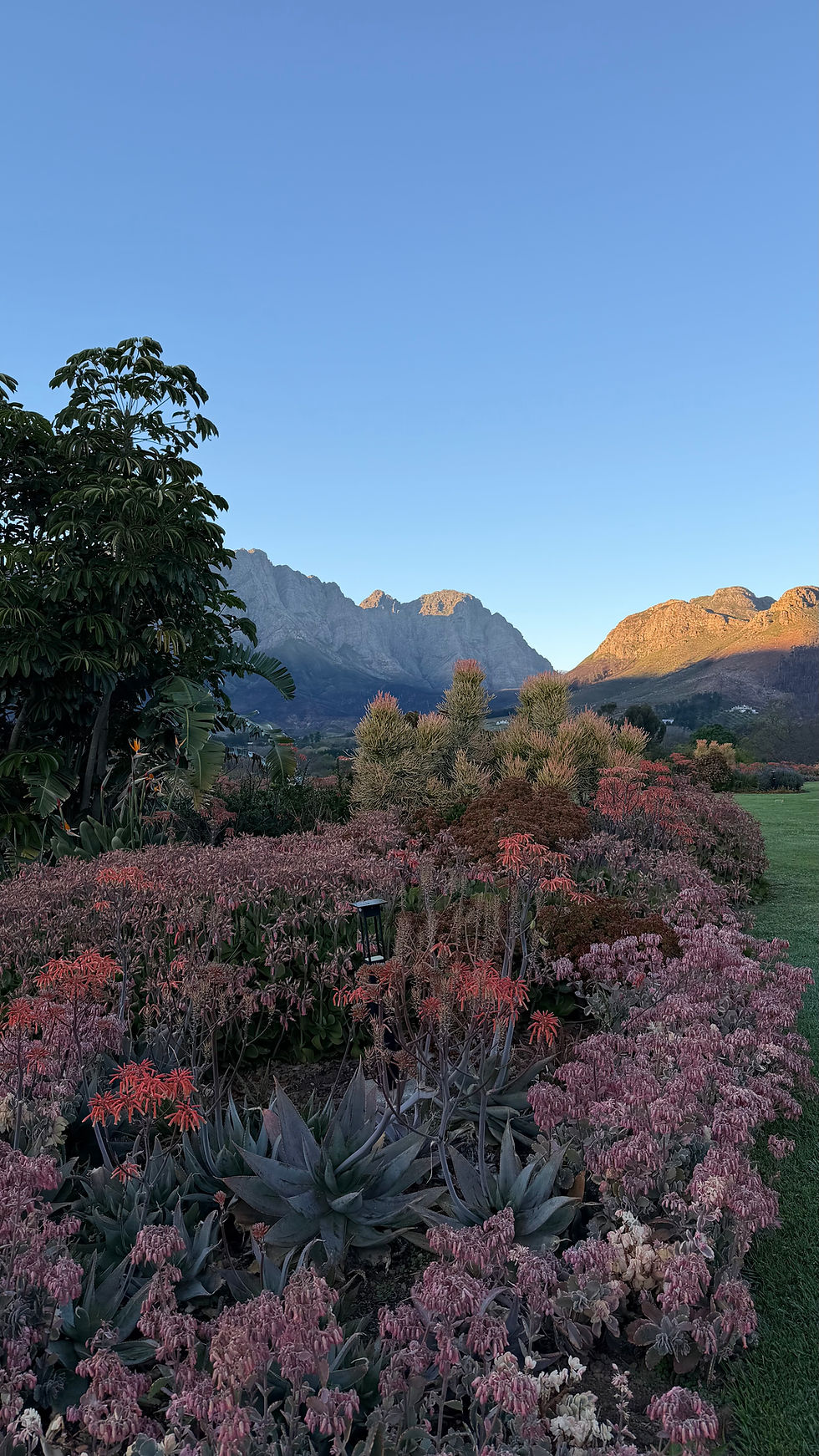
We are currently in Franschhoek, South Africa, staying at Mont Rochelle – a place associated with Richard Branson, who at 76 is still starting new projects. And it is here, of all places, that I find myself wondering whether I might already be too old for some things. Not because I believe you are never too old for anything – that simply isn’t true. Time is finite. And as we get older, that finiteness becomes more tangible. Perhaps, then, the question itself is wrong.
How old will I be when I’m finished with it?
For decades, I was used to thinking in long time horizons. Anyone who builds a company invests years without knowing what will come of it. Anyone who takes responsibility thinks beyond the next quarter. You build structures, develop people, invest, discard ideas and start again. Ten years was a planning horizon. At some point, ten years becomes a tangible part of the time you have left. One response is to stop starting things that will take a long time. Or you can ask a different question: Is this worth ten years of my life?
“I’m too old for that” ends the thought.
“Is it worth my time?” opens it up.
Perhaps I don’t have to finish everything myself
There is another thought behind this that I find difficult. I am used to finishing what I start. A project has a beginning, a goal and, eventually, a result. But perhaps that, too, is an assumption worth reconsidering. A tree I plant today does not have to reach its full height in my lifetime for planting it to have been worthwhile.
For generations, this was taken for granted. People built houses, planted avenues of trees and developed businesses knowing that others would carry them forward. Perhaps we have become too accustomed to measuring everything against the span of our own lives.
The time we have left changes the decision
Perhaps this is also on my mind because an idea for a new, larger project is beginning to emerge for us – one that would occupy us not for a year or two, but for much longer.
After many years of professional life, not every interesting opportunity needs to be pursued. You no longer have to be involved in everything. And you no longer have to prove to anyone that you can still build something significant. There is a freedom in that which I did not have before. I can choose more carefully what I want to spend the time I have left on.
Perhaps that means there are some things I will no longer start. And others I will start for precisely that reason.
I don’t yet know what decision will come of this.
Perhaps that is the more interesting question for you, too: not whether there is enough time left, but what you want to spend it on.


